- Foodna
- Riyadh, Saudi Arabia
- Brand strategist · Creative director
- Brand Strategy
- Naming
- Brand Identity
- Mobile App Design
- Copywriting
- Advertising
- Social Media
- Launch Campaign
It was never about building a better app. It was about reaching food nobody else could.
That became the strategic position: Foodna wouldn't win by building a better version of the same app. It would win by delivering food nobody else could reach, from outlets that had never made their food available through a delivery app before.
Foodna
Arabeezy for “our food”
By 2018, homegrown food delivery apps launching into fast-growing markets like Saudi Arabia's had settled on the same playbook for competing against the international platforms already dominating the space: build a better app. Sharper design, better marketing, a stronger brand personality. If a startup couldn't match a global platform's restaurant partnerships, it would try to win on design instead.
It sounds logical. It also means every homegrown app ends up fighting on the one terrain where a better-funded global competitor will eventually out-spend it: the interface.
When Foodna approached me in 2018, it was a young Saudi team backed by a group of tech investors, preparing to launch a completely homegrown delivery app into a market already crowded with established global players.
I didn't think the fight was app versus app. I thought it was supply versus supply. Every delivery app already in the market, homegrown or global, was competing over the same limited list of restaurants willing to partner with delivery platforms in the first place.
That became the strategic position: Foodna wouldn't win by building a better version of the same app. It would win by delivering food nobody else could reach, from outlets that had never made their food available through a delivery app before.
The identity had to carry that idea from the name down. I named the brand Foodna, a mix of Arabic and English known regionally as Arabeezy, which reads as "our food," a direct signal of local ownership against platforms that were, in look and language, imports. The brandmark took the Arabic letter that opens the name and turned it into an emoji.
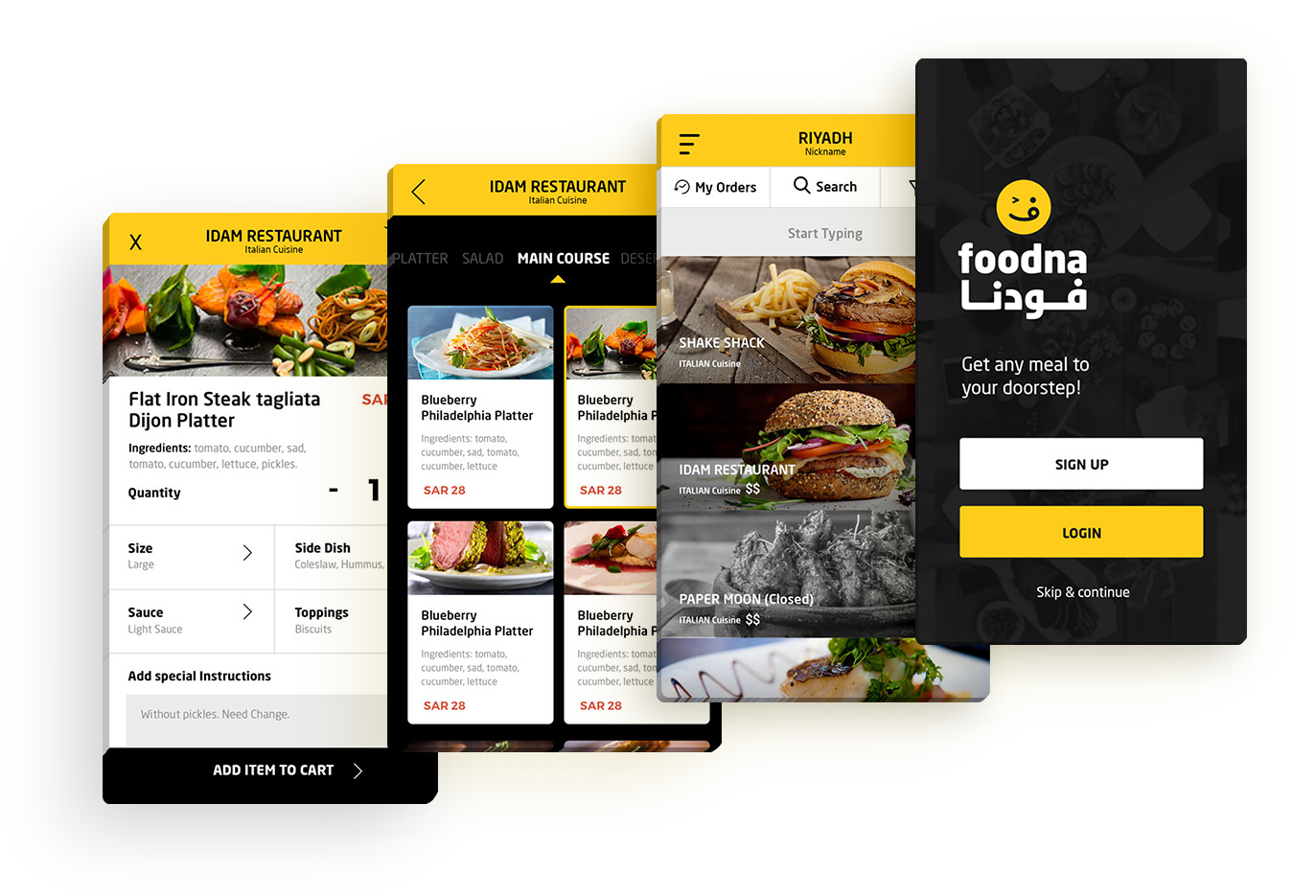
From there, I led the team that built the identity out into a complete product: a playful visual language and tone of voice, carried by a cast of characters that showed up everywhere a customer touched the brand, in the app and again at the door when the order arrived. Beyond identity, I led the design of the entire app experience end to end: homepage, live order tracking, menu, item detail and checkout.
As Foodna prepared for a citywide launch, those same characters anchored the go-to-market push. I led development of a launch campaign built around outdoor placements, guerrilla activations, digital advertising and giveaways, designed to put a homegrown name in front of customers before a single order had been placed.
Foodna didn't need to be the best-designed app in Riyadh. It needed to be the one that could deliver food nobody else could.