- Hilton Doha The Pearl
- Doha, Qatar
- Brand strategist · Creative director
- Brand Repositioning
- Guest Experience Strategy
- Psychographic Segmentation
- Messaging Architecture
- Campaign Platform
- Internal Brand Activation
The future of luxury belongs to the brands capable of making every guest feel like the hotel had been built just for them.
0%0%
Increase in occupancy, within one season of launch
I didn't think the hotel had a scale problem. I thought it had a positioning opportunity.
Inspired by You
Hospitality in Qatar had spent the better part of two decades competing on abundance. More restaurants. More amenities. More marble. The assumption seems obvious: if luxury means having more, then the hotel with the most should win.
It sounds logical. It also explains why so many luxury hotels had become impossible to distinguish from one another.
When Hilton Doha The Pearl approached me in spring 2024, occupancy sat at 38%. On paper, the explanation appeared straightforward: as a smaller property in one of the world's fastest-growing hospitality markets surrounded by luxury chains with far greater scale and grandeur, it appeared to have less to offer.
I didn't think the hotel had a scale problem. I thought it had a positioning opportunity.
The market had already begun to change. Travellers were placing increasing value on experiences that felt personal, relevant and tailored to them as individuals. The irony was that the hotels competing hardest on luxury were also the ones structurally least capable of delivering that experience. Hundreds of rooms, multiple restaurants and sprawling operations made genuine personalization increasingly difficult.
Hilton Doha The Pearl occupied a very different position.
With 281 rooms, it could offer something its larger competitors couldn't: the opportunity to know its guests, anticipate their needs and create experiences that felt intentionally designed rather than universally applied. What looked like a commercial disadvantage was, in reality, a structural advantage perfectly aligned with where the market was heading.
The work that followed extended far beyond defining a positioning statement. I rebuilt the guest strategy around psychographic rather than demographic segmentation, identifying the emotional motivations behind a stay instead of relying on age, nationality or income. Rest. Romance. Celebration. Discovery. Escape. Those motivations became the foundation of the brand, informing the guest experience strategy, messaging architecture and activation of every major space across the property.
Each environment was given a distinct strategic role while remaining part of one coherent system. The spa spoke to restoration. The beach spoke to stillness. The Kids' Club spoke to parents creating memories. Restaurants, residences and leisure facilities each addressed a different emotional need, allowing the hotel to feel deeply personal without ever fragmenting its identity.
That thinking became Inspired by You.
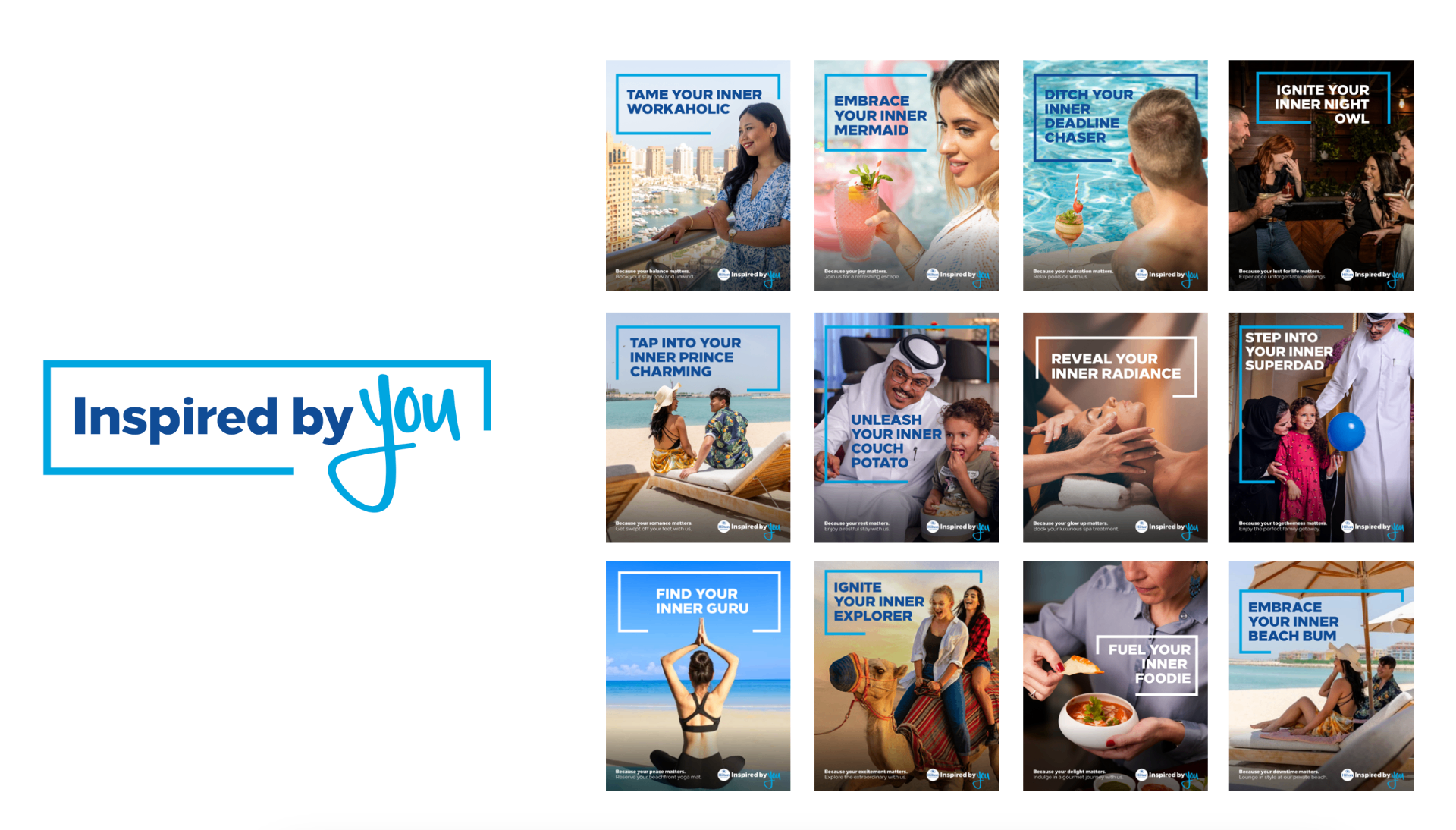
Not another campaign line, but a dynamic brand platform capable of generating communications, campaigns and guest experiences across different audiences, seasons and departments without fragmenting the brand. The positioning became an operating system, guiding everything from creative direction and marketing to programming and day-to-day decision-making.
A position only creates value when an organization can deliver it consistently. Strategy doesn't live in presentations. It lives in the thousands of small decisions people make every day. To embed the positioning, I developed internal brand toolkits and facilitated company-wide workshops that translated the strategy into behaviour. Reception, housekeeping, food and beverage, the spa and guest services all learned to interpret the same strategic idea through the lens of their own role. Every interaction should feel as though it flows from the same mind.
Within one season of launch, occupancy climbed from 38% to 82%.
The transformation wasn't driven by a larger advertising budget, a renovation or a new visual identity.
It came from recognizing that the future of luxury would belong to the hotels capable of making every guest feel like the brand had been built for them.
Hilton Doha The Pearl wasn't competing against larger hotels.
It was competing for the future of luxury itself.